People in North Korea can’t access the internet. But that hasn’t stopped a meaningful share of them from buying smartphones.
Replete with a full suite of apps but confined to a restricted national intranet, the phones tell the story of a rapidly digitizing society, in which even a limited version of digital life has become yet another layer of government control.
Smartphones are a luxury concentrated among North Korea’s elite in the capital, Pyongyang. With retail prices around $750 for top-tier phones — an exorbitant sum in a country where many people earn a tiny fraction of that amount in formal wages, plus whatever they can scrounge on the side — they remain far out of reach for the vast majority. But they appear to be sufficiently available in Pyongyang for state media to air segments offering tips for people experiencing eyestrain from spending too much time on their smartphones.
Here is a rare look at the digital life North Korea’s government permits — and increasingly appears to encourage.
Online banking
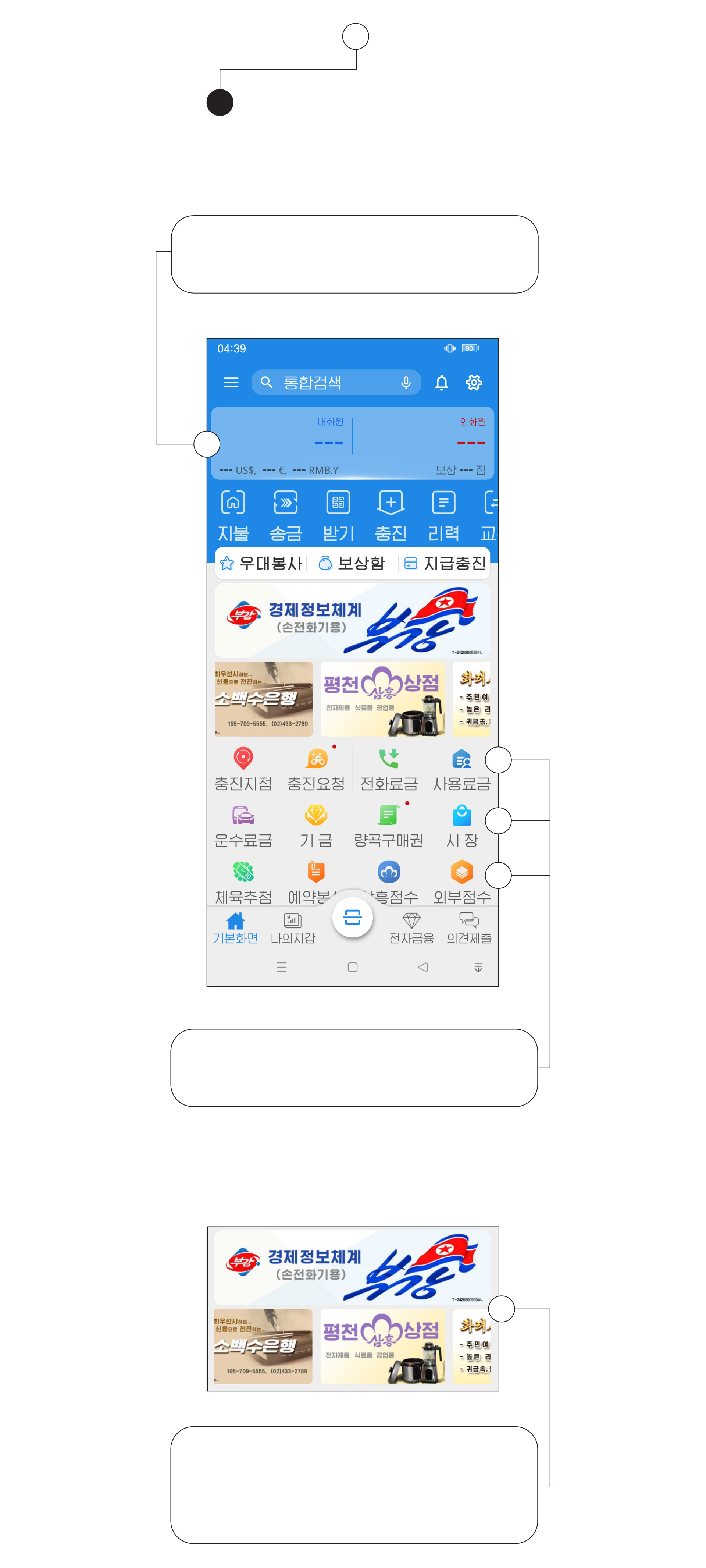
North Korea has long relied on cash, but for those with smartphones, e-wallet apps are changing that.
Online banking is giving the state greater control over currency circulation, exchange rates, prices and taxation — which it has sought since the 1990s, said Peter Ward, a research fellow at the Seoul-based Sejong Institute who studies the North Korean economy.
“You can do it indirectly, assuming that all the shops have CCTV and keep books. But it’s really difficult to monitor cash transactions at scale” unless people start to bank online, Ward said.
E-wallet apps allow people to make and receive payments. North Korean elites use them to pay for transit and top off their bank accounts at ATMs.
North Koreans use local currencies (in blue) and foreign ones (in red), such as U.S. dollars and Chinese yuan, which are more stable than North Korea’s won.
These icons show various functions, including: Where to fill your e-wallet, phone bill, data usage bill, grain purchasing voucher, donations and marketplace.
Various ads are displayed across the app.
A cabbage health drink and a building materials company are among the advertisers.
Top: Ad for Korea Pugang Corp., a major state-run company that produces electronics, pharmaceuticals and other products.
Bottom middle: A store under the Samhung brand that sells electronics, food products and industrial products.
The government has also long tried to exert greater control over the grain supply and to crack down on theft and corruption along the distribution line, an effort electronic payments enable, Ward said.
QR code payments using smartphones are increasingly available in Pyongyang and are even being used by street vendors, according to people who have visited the city in recent years. People can also use e-wallets to pay for public transportation, book taxis, order food delivery and reserve movie tickets, according to Steven Zhang of Young Pioneer Tours, which arranges trips to North Korea.
Video streaming
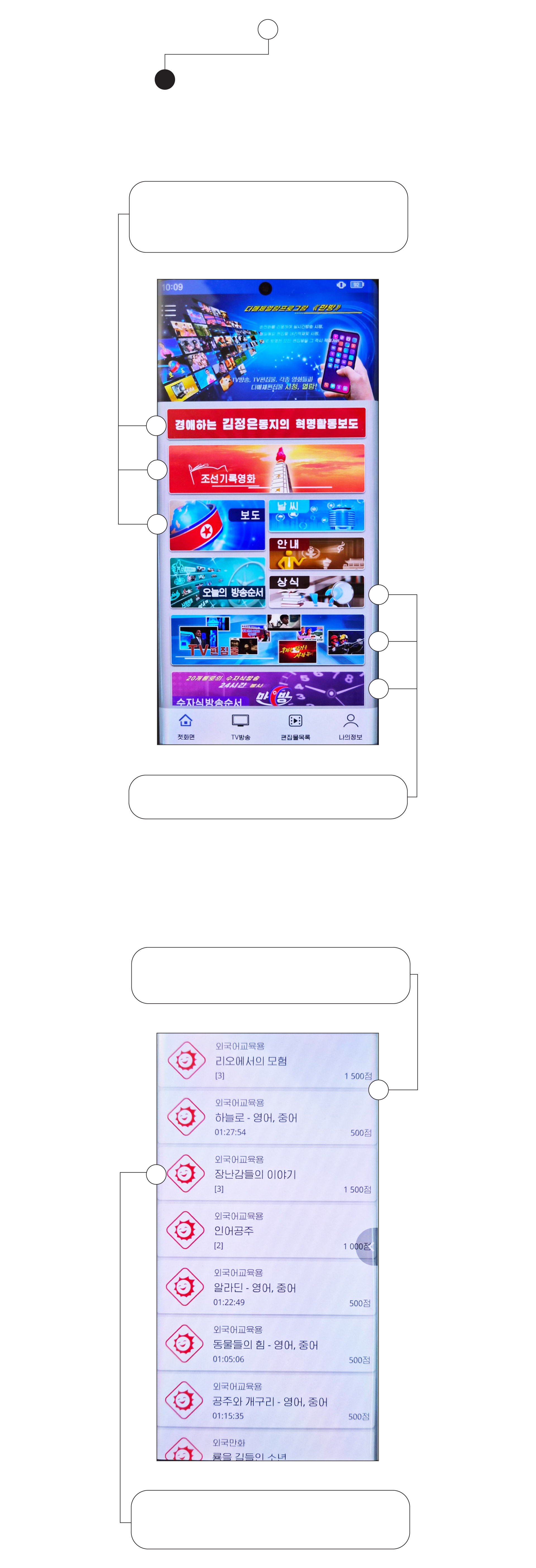
What do North Koreans watch when they’re bored? Those with smartphones can turn to Manbang, a 24-hour video streaming app for television shows and movies on demand, as well as state media videos.
Manbang, a video streaming app, offers a wide selection of shows and movies from carefully selected countries: China, the former Soviet Union and the former East Germany, along with Bulgaria and Romania during their Eastern Bloc days.
Top row: Report on the revolutionary activities
of the respected Comrade Kim Jong Un
Second row: North Korean documentary films
Third row: News and weather
Displays showing the daily broadcast order and clips
that aired on national TV.
As much as North Korea demonizes the United States, its apps offer many animated American movies for the purposes of English-language learning: Disney classics (“Aladdin,” “Pinocchio”), stories of female empowerment (“Moana,” “Frozen”) and other popular animations (“Ratatouille,” “Wall-E”).
Bottom right of each: There are “points” associated with each video title, indicating a credit-based payment system used within the app.
A column of foreign animated films: “Rio,” “Up” (in English and Chinese), “Toy Story,” “The Little Mermaid,” “Aladdin” (in English and Chinese) and “The Princess and the Frog”
The diverse offerings appear to be a way to give North Koreans state-approved options amid a crackdown on foreign-made television shows and movies entering the country illegally, said Williams, the senior fellow at the Washington-based Stimson Center’s Korea Program and its 38 North project. The government is especially strict on smuggled South Korean dramas and movies, the distribution of which is punishable by death.
Privilege for the elite
The number of cellphone users in North Korea has boomed in recent years, after they became available in 2008. There are more than 6.35 million phone subscriptions in the country of about 26 million, researchers say. It’s unclear how many of them are smartphones, usually Chinese hardware equipped with North Korean software.
With a 4G network available in much of the country, hundreds of state-approved apps and at least 24 domestic cellphone brands have taken off, Williams said.
The widespread availability of North Korean-made apps suggests the country’s software engineering is growing increasingly sophisticated, he said.
Living in Pyongyang is a generational privilege, one that comes with access to comforts, and even excesses, that are mostly unthinkable outside the capital.
The expansion of smartphones in Pyongyang is a part of leader Kim Jong Un’s efforts to invest in urban development there, as he seeks to keep elites happy and loyal to the regime, experts say. It also underscores how Kim has insulated the elite from the economic shocks of the coronavirus pandemic, according to an analysis by 38 North, a North Korea research program at the Stimson Center, a Washington-based think tank.
Women’s health and fitness apps
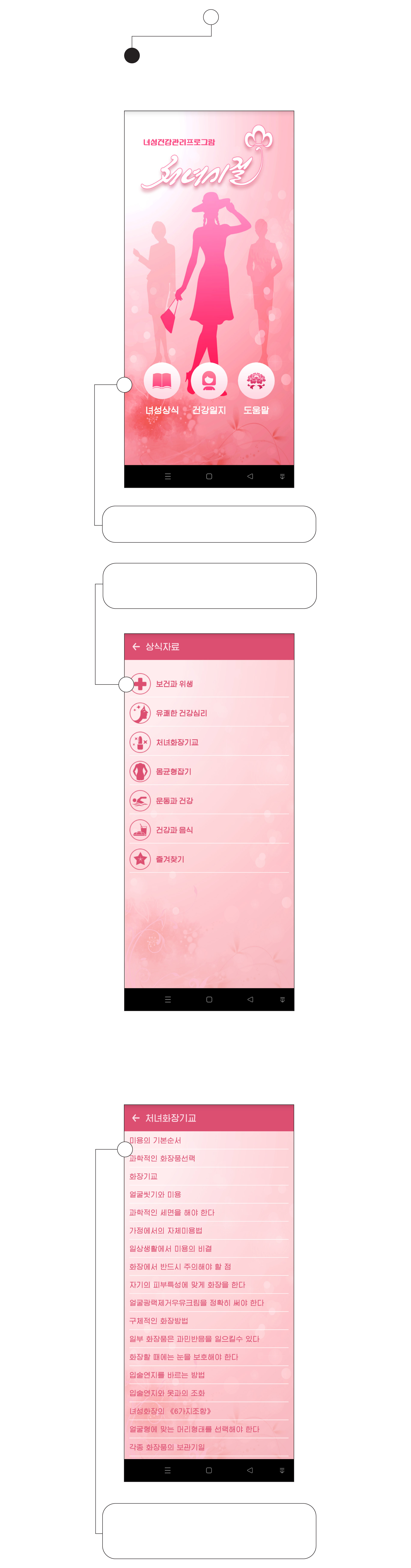
In lieu of the “Get Ready With Me” TikTok videos that are popular elsewhere, there is a North Korean app that offers tips on everything from period tracking to makeup tutorials and how to maintain a slim waistline.
The women’s app offers tips on beauty, health
and reproductive cycles.
Icons, left to right: Common Sense for Women;
Health Diary; and Help/FAQ
Features, top to bottom: Health and Hygiene; Health
and Psychology; Beauty Makeup Techniques; Balancing Your Body; Exercise and Health; Health and Diet; and Favorites
The app offers practical advice (never
go to bed with makeup on), a skin care regimen (get plenty of sleep) and even a scientifically dubious tip for dealing with differently sized breasts (massage the smaller breast at least 15 minutes a day).
This screen shows the range of makeup tutorial categories available on the app, including properly washing your face, protecting your eyes while putting on makeup and matching your lipstick to your clothes.
The app, called “A Woman’s Age,” opens with a message from Kim Jong Il, the former leader of North Korea: “We must turn our attention to women’s health management.”
Medicine delivery
Domestically produced and imported medicines can be found in North Korea, even though the country has a crumbling health care infrastructure and often develops scientifically unproven treatments.
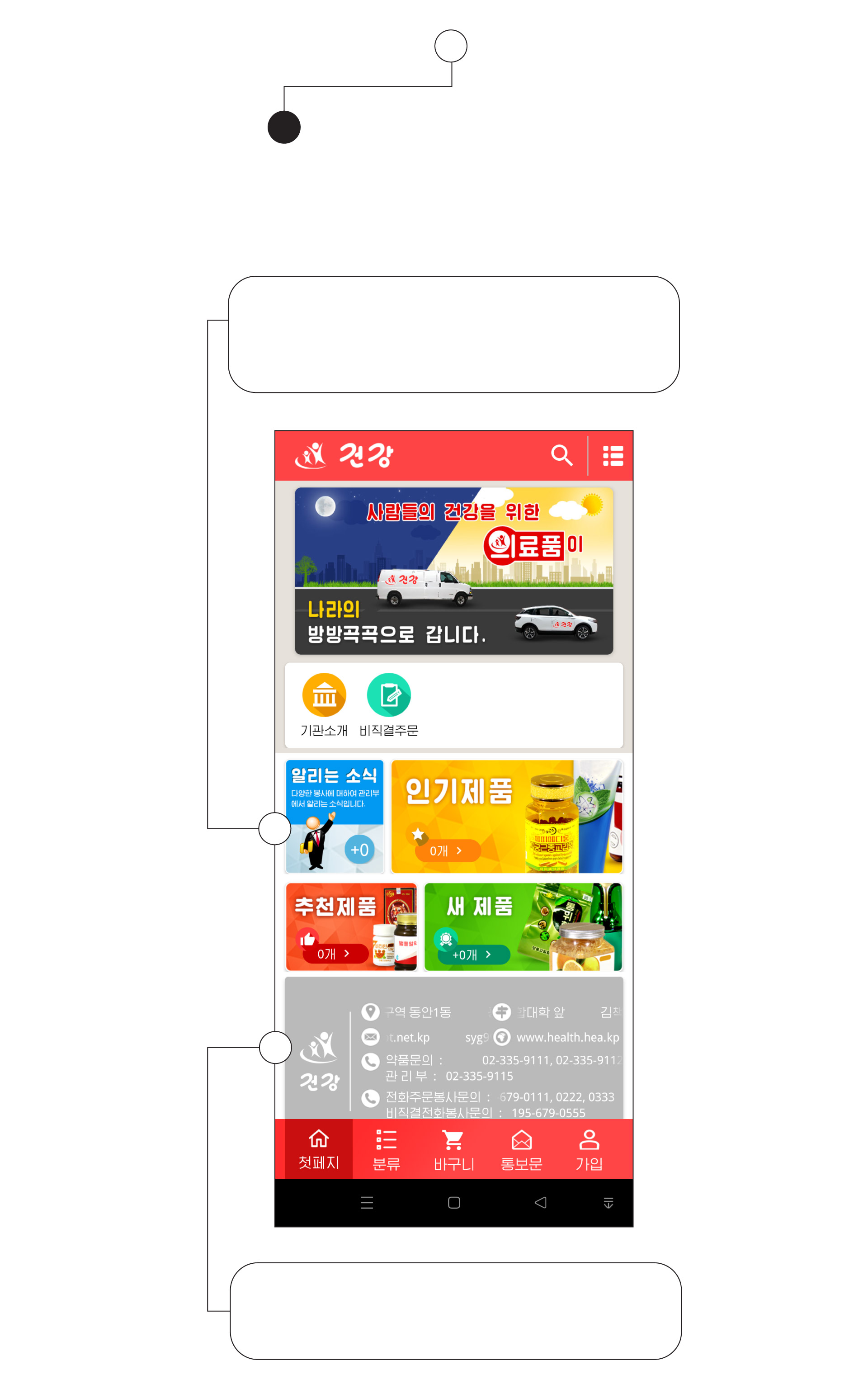
Now, there is an app on which users can purchase medications and get them delivered. This is also likely to allow electronic tracking of medicine purchases, which could make theft more difficult, helping the government keep closer watch on the pharmaceutical supply, Williams said.
The app purports to deliver more than 3,000 types of medications across the country, from cough medicine to hepatitis pills. It is most likely limited to Pyongyang, despite what the app claims.
Left: This icon provides announcements from the government’s management department on various volunteer activities in which people can participate.
Right: Popular Products
The information here indicates the app is associated
with the Kim Chaek University of Technology, a prestigious engineering school.
Conveniently, there is a separate “Medication Dictionary” app that allows users to look up medical terms they may not know as they order pharmaceuticals.
Navigation
Pyongyang residents with smartphones can now pay by scanning QR codes and read state media on e-readers, according to state media reports and people who have visited the city in the past two years.
They can also call a cab — similar to using Uber or Lyft elsewhere in the world — with price surges during rush hour and late at night. A 45-minute ride cost about $8 at surge pricing or $5 otherwise, said Rowan Beard, co-founder of Young Pioneer Tours.
These technological advancements are a part of what appears to be a more economically vibrant North Korean capital compared with before the coronavirus pandemic, likely thanks to an infusion of cash from the regime’s crypto theft activities and its support for Russia in the war against Ukraine, researchers say.
Pyongyang’s skyline boasts new high-rise apartments, and more cars than ever fill its roads, leading to traffic jams, said Beard, who has visited the country four times since last year.
***
North Korea’s latest smartphones reveal a digital world that at first glance looks somewhat like the one outside — one that foreigners would not necessarily associate with closed-off life there.
It’s become possible because of Kim’s growing confidence in his ability to exert control while introducing new luxuries that aim to normalize North Korean life, at least for some, said Williams, who helped The Post gain access to the phones.
Kim’s government “feels confident it can control how people use technology,” he said. “If the government wasn’t okay with it, there wouldn’t be this much activity.”
The rise of smartphones in North Korea, given their limitations, has not come with any increase in access to information from beyond the country’s borders.
Those who wish to access the outside internet risk their lives. They must purchase SIM cards off the black market and catch a signal from Chinese cellphone towers near the border. Even then, they are subject to China’s digital surveillance and firewall.