Africa’s New Cities – Urban Utopias or Future Ghost Towns? December 29th, 2025
Via The Africa Report, a look at how – from Cairo to Libreville and Dakar – new towns are proliferating, driven by massive investments and futuristic promises. While they inspire dreams for many residents, they remain difficult to bring to life:
From the Egyptian desert to Senegal’s clay soils, in recent years, African governments have caught construction fever, creating cities ex nihilo on the outskirts of capitals. Whether they are called new towns or satellite cities, smart cities or start-up cities, these futuristic megaprojects with the air of urban utopias promise to relieve congested capitals, attract foreign investors and provide residents with the most up-to-date and efficient services.
They are often characterised by top-down governance and their ambition to “wipe the slate clean and build neighbourhoods from nothing”, as noted by urban and public policy specialist Sina Schlimmer in a 2023 briefing published by the Institut Français des Relations Internationales (IFRI).
They feature a mix of administrative, economic and technological hubs connected to the world via international airports, alongside conference centres or special economic zones.
Building from nothing
Behind the flashy models and ambitious speeches, a more nuanced reality emerges. “A city cannot simply be decreed. Creating a theatre on one side or housing on the other is not enough to generate a social life,” says Ivorian architect and urban planner Issa Diabaté. Between real hopes for development and the risk of seeing only empty shells emerge, these projects embody the contradictions of contemporary African urban planning.
When creating a new town, you do not create it in 10 years, nor even 20: it is a process
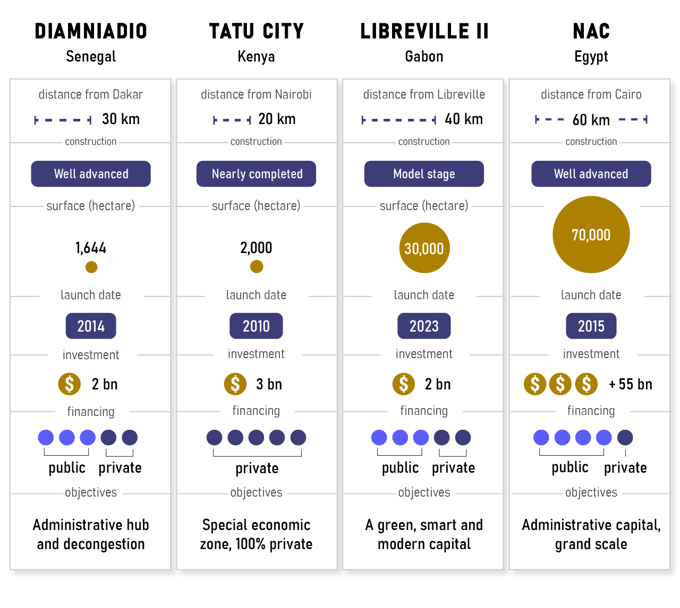
To analyse these projects, The Africa Report has focused on four of the most emblematic: Diamniadio in Senegal, the New Administrative Capital (NAC) in Egypt, Tatu City in Kenya and Libreville II in Gabon. These four new towns share the ambition of building a desirable, innovative urban future, but differ in terms of financing, size and degree of completion.
The Egyptian NAC, more than 50km from Cairo, mobilises nearly $60bn for a project covering 70,000ha – 25 times the size of Tatu City or Diamniadio. From Tatu City, functional for almost a decade, to Libreville II, still at the stage of artist impressions and architectural plans, the level of progress varies greatly from country to country.
The projects also differ in objectives, oscillating between national political symbolism, as in Egypt or Senegal, and private entrepreneurial models, as in Kenya.
Diamniadio: Extensive infrastructure, few inhabitants
Integrated into the Plan Sénégal Émergent 2035, launched in 2014 by former president Macky Sall, Diamniadio aims to relieve the capital, where most administrations and corporate headquarters are concentrated within a few square kilometres of the Cap-Vert peninsula. It is a striking example of the gap between investment in infrastructure and that dedicated to housing, which de facto hampers the emergence of urban life.
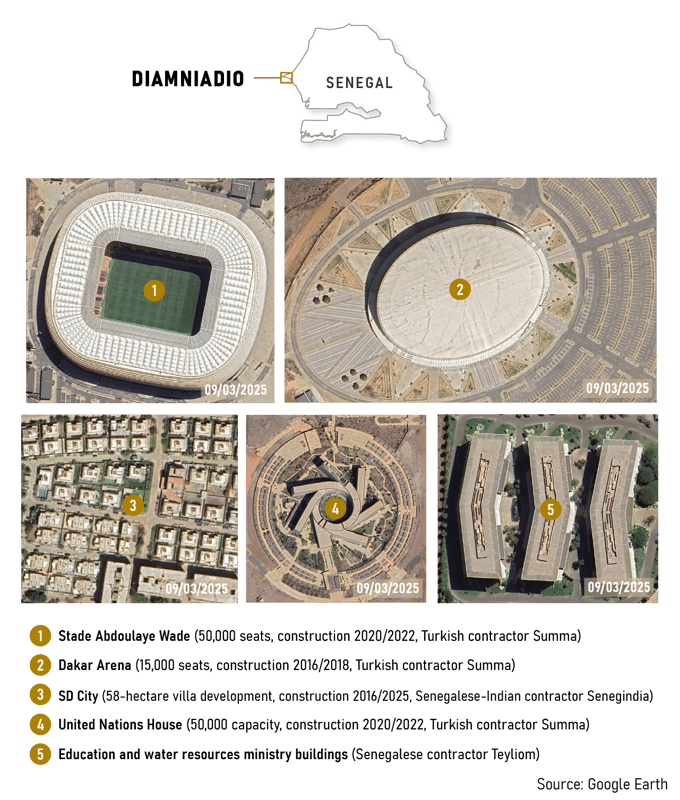
Indeed, the city hosts numerous achievements: an international conference centre (CICAD); relocated ministries; a high-end hotel, the Radisson; the Stade Abdoulaye Wade; the Dakar Arena, a flagship of Senegalese basketball; and the impressive United Nations House. Yet, while the buildings exist, Diamniadio remains almost empty of residents, having failed so far to attract enough people from Dakar.
Moreover, although the Regional Express Train (TER), inaugurated in 2021, has improved connectivity, Diamniadio remains primarily a city for work rather than residence. The ministerial sphere is active during the week, but by late afternoon and at weekends, Diamniadio resembles a ghost town. The absence of markets, local shops and, more broadly, neighbourhood life, combined with often unaffordable property prices, discourages employees from leaving Dakar’s bustling districts.
The SD City residential project (aerial photograph number 3 in the infographic above) is symptomatic of this. Built by the Senegalese company Senegindia, this neighbourhood of luxury villas and apartments targets the upper-middle class.
Its pricing and associated costs make it largely inaccessible for the average Dakar resident. In addition, construction delays, problems with water and electricity access, and management failures have contributed to its lack of popularity.
Diamniadio also reflects highly top-down governance, directed unilaterally by Sall, who described it as his “legacy for future generations”. Management by presidential decree allowed the project to bypass bureaucratic hurdles. However, the exclusion of elected representatives from the communes where the city was built caused land conflicts, particularly with residents of Bargny.
The project’s design also overlooked the local social dynamics, which is essential for a city to come alive. “Infrastructure is planned, buildings are planned, and it is wrongly assumed that the rest will automatically follow,” Diabaté says.
Sisi’s pharaonic ambitions
While Diamniadio is characterised by empty streets, the Egyptian New Administrative Capital astonishes with its sheer scale. As vast as Kinshasa in the DRC, this futuristic city rising from the desert an hour from Cairo embodies President Abdel Fattah el-Sisi’s enormous ambition: to build a “new Dubai” capable of hosting six million residents.
Will it become a white elephant, luxurious yet heavily monitored?
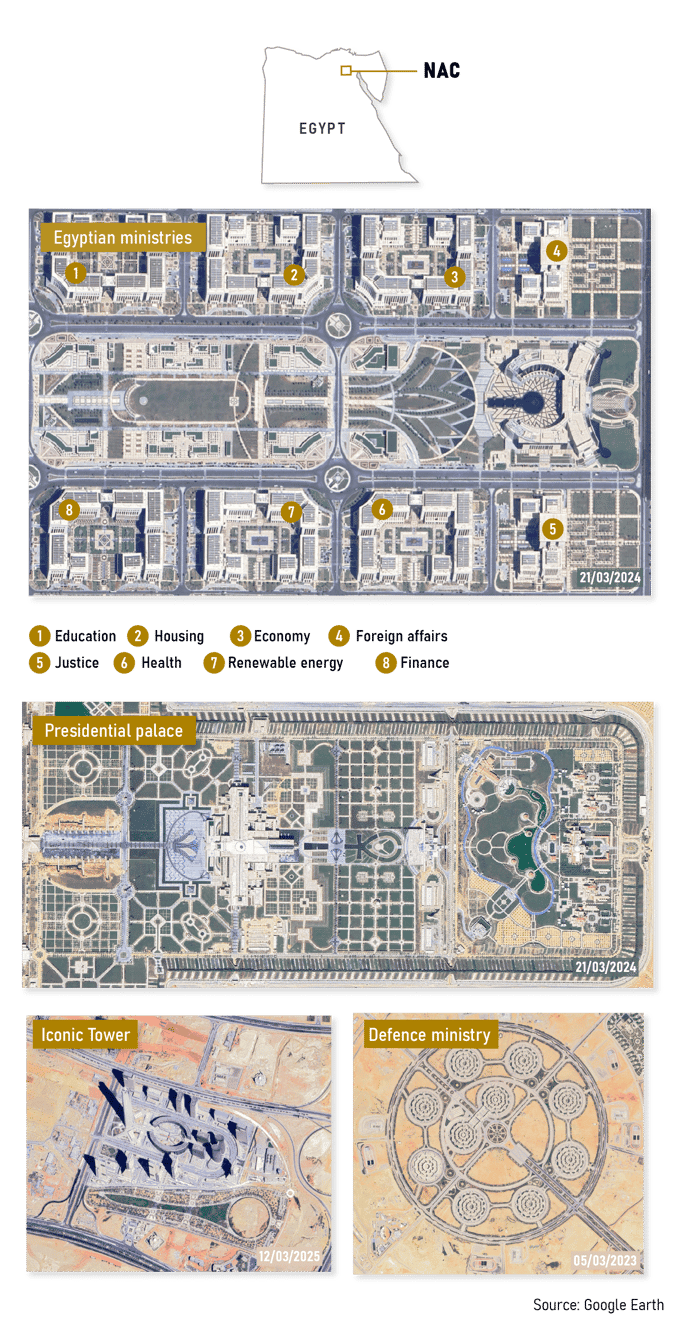
Aerial photographs reveal the massive scale: the Msir Mosque, potentially the largest in Africa, and the Iconic Tower, hoping to claim the status of the continent’s tallest skyscraper (394m). The Presidential Palace, blending Coptic and Versailles-inspired styles, and the headquarters of various ministries complete this panorama of superlatives.
The Octagon, a nod to the US Pentagon, will host Egypt’s defence ministry and to become ‘the largest military headquarters’ on the planet.
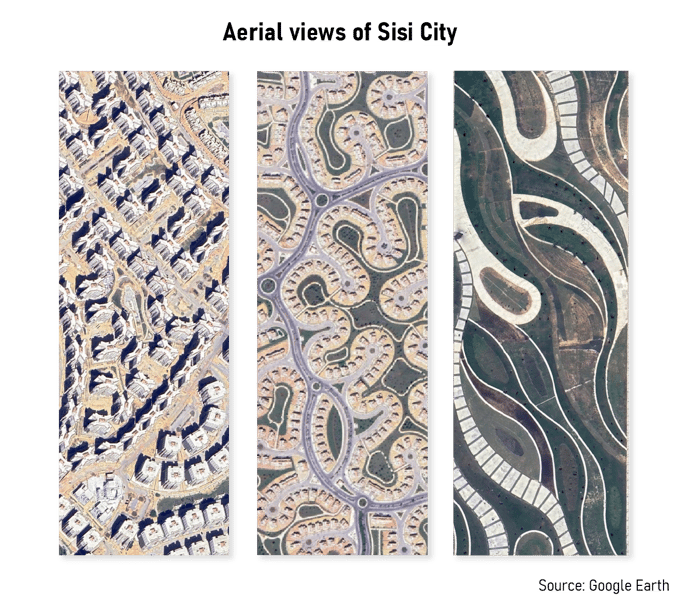
Dubbed ‘Sisi City’ by Egyptians, this city, intended to become the new capital, was decided and built without consultation, costing over $58bn. The Egyptian state covers much of this through public debt, at a time when the country faces a severe economic crisis and high inflation. Gulf and Chinese investors, involved from the early stages, have remained cautious, leaving the government to pay the majority of construction costs.
Although inaugurated earlier this year, the New Administrative Capital’s future is uncertain. Can it truly come alive? Will it become a white elephant, luxurious yet heavily monitored, with no fewer than 6,000 cameras scrutinising every corner? Critics also question whether Cairo’s roughly 23 million inhabitants, nearly half of whom live below the poverty line, will have access.
Tatu City – a private model
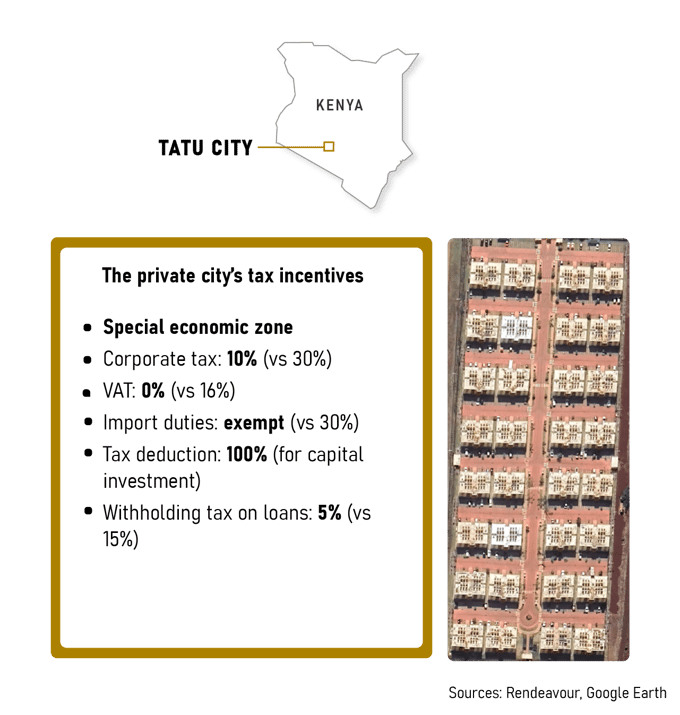
Twenty kilometres north of Nairobi, Tatu City offers a radically different model: a 100% private satellite city developed by Rendeavour, founded in 2012 by New Zealand-born banker-turned-urban entrepreneur Stephen Jennings.
Officially based in Lagos and backed by international investors, the company builds ‘satellite’ urban projects near major African cities, such as Appolonia City north of Accra in Ghana, Jigna near Abuja in Nigeria, and Roma Park on the outskirts of Lusaka in Zambia.
Tatu City is a special economic zone, offering tax advantages that have attracted over 80 companies in logistics, chemicals and agribusiness, including Syngenta and Twiga Foods. It currently hosts around 5,000 residents.
A moderate success, the project appeals due to its functional layout and strong law enforcement: surveillance cameras are omnipresent, fines for speeding or littering are strictly applied, and self-sufficient water and electricity supply shields residents from blackouts.
But this efficiency comes at a price. A one-bedroom apartment costs around $40,000 – 20 times Kenya’s per capita GDP.
“There is no miracle solution for housing poor urban populations who cannot afford it,” Rendeavour Kenya director Nick Langford told Reuters in 2019. “We would like to build more affordable housing, but we cannot without subsidies.”
Libreville II – a green metropolis?
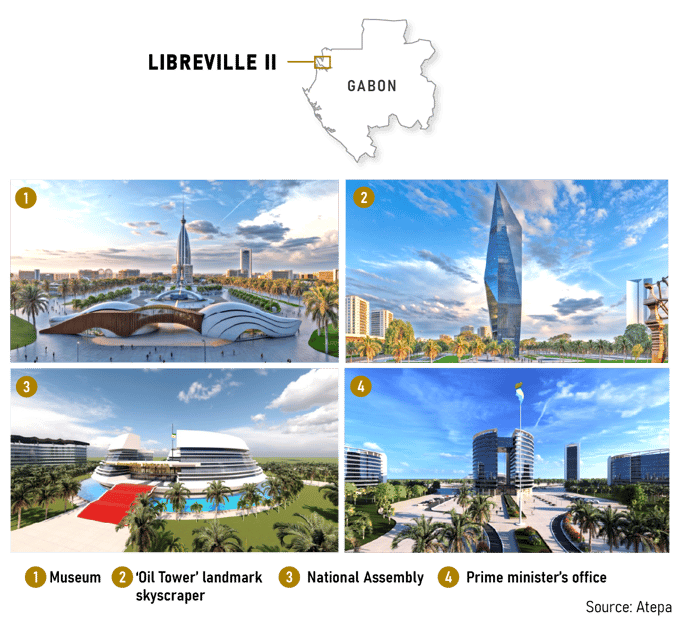
Covering 30,000ha, Libreville II, launched in 2024 by Brice Clotaire Oligui Nguema, promises a green and smart metropolis built around 12 hubs: the presidency, ministerial city, digital university, agropoles, financial city, industrial free zone, and even an African theme park designed to rival Disney’s Savannah Kingdom.
Senegalese architect Pierre Atepa, designer of the project, envisions a utopia where “artificial and human intelligence” would create a visionary capital. Yet many fear Libreville II may remain an empty shell, an abstract project too distant from Gabonese realities to thrive.
Atepa admitted in September to our sister magazine Jeune Afrique: “When creating a new town, you do not create it in 10 years, nor even 20: it is a process.”
The overall budget – several billion dollars have been mentioned – remains unclear, and preliminary studies are barely underway. Between eco-responsible city and tourist project, with references to Marvel’s Wakanda, Libreville II remains at the design stage.
‘Enclaves for the wealthy’
“These futuristic megaprojects have sparked controversy, particularly regarding their usefulness and accessibility for largely poor urban populations,” says Schlimmer.
If you do not provide housing suitable for workers, it will emerge spontaneously and chaotically
Researcher Sarah Moser, an expert on new cities at McGill University in Canada, agrees: “It is more profitable to build housing for the wealthy than for the poor; many of these new towns thus become enclaves where the wealthy isolate themselves from urban problems.”
Diabaté also offers a stern verdict: “You have to start with more than elite facilities. If you build a conference centre, staff will be needed to clean it. But if you do not simultaneously provide housing suitable for these workers, it will emerge spontaneously and chaotically.”
African new cities that have succeeded – Abuja, launched in the 1980s and now home to four million – took three to five decades to come alive. Utopias decreed from above, financed through public debt and designed as geopolitical tools to attract investors and symbolise national power, risk remaining empty theatres where infrastructure shines, but the essential element – a living community – is missing.
This entry was posted on Monday, December 29th, 2025 at 7:09 am and is filed under Egypt, Gabon, Kenya, Senegal. You can follow any responses to this entry through the RSS 2.0 feed.
Both comments and pings are currently closed.
Comments are closed.
ABOUT
Wildcats & Black Sheep is a personal interest blog dedicated to the identification and evaluation of maverick investment opportunities arising in frontier - and, what some may consider to be, “rogue” or “black sheep” - markets around the world.
Focusing primarily on The New Seven Sisters - the largely state owned petroleum companies from the emerging world that have become key players in the oil & gas industry as identified by Carola Hoyos, Chief Energy Correspondent for The Financial Times - but spanning other nascent opportunities around the globe that may hold potential in the years ahead, Wildcats & Black Sheep is a place for the adventurous to contemplate & evaluate the emerging markets of tomorrow.