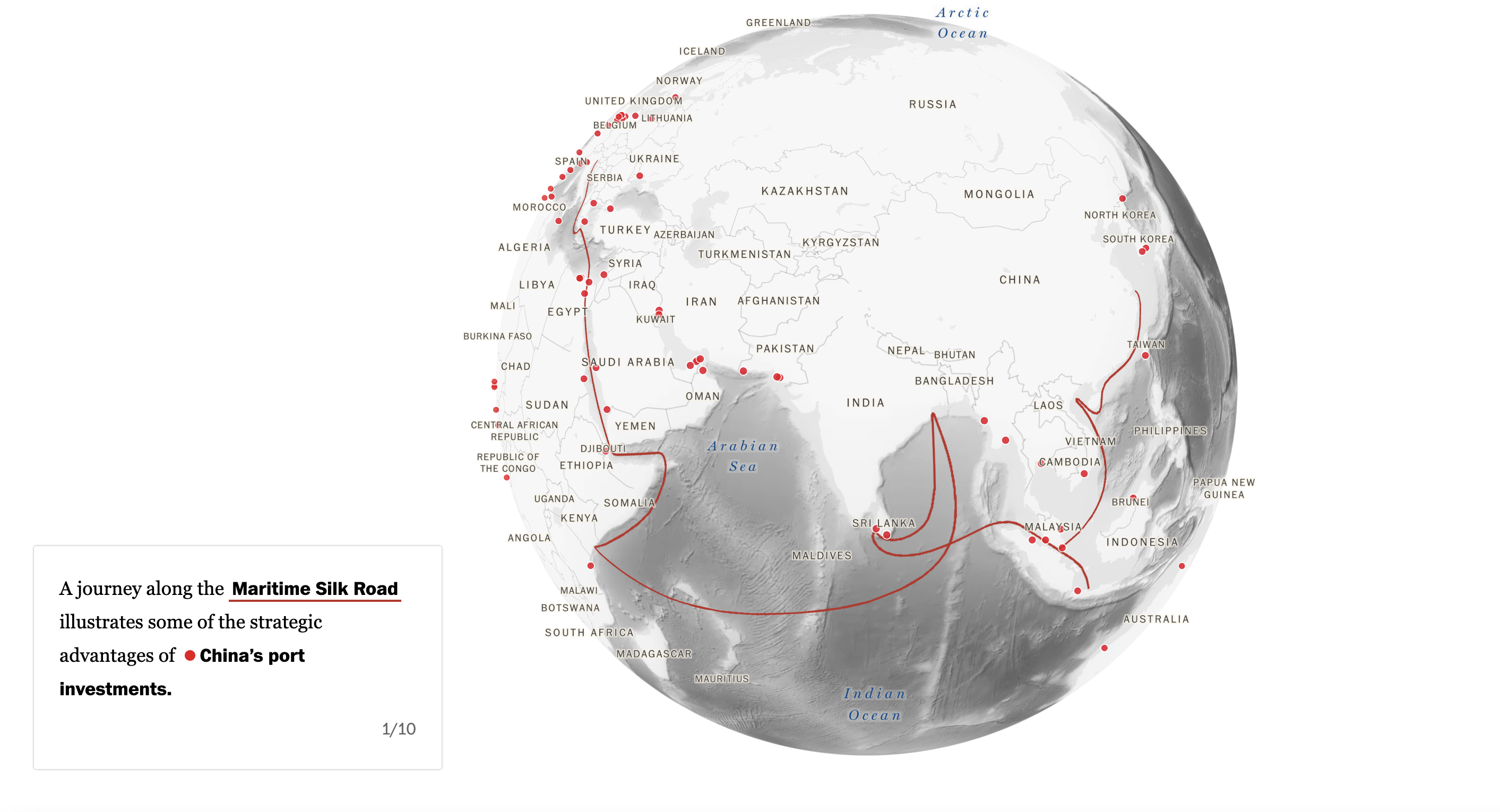
A decade ago, Chinese President Xi Jinping launched the Maritime Silk Road, the oceanic component of his flagship Belt and Road Initiative aimed at improving China’s access to world markets by investing in transportation infrastructure. The initiative’s investments have since slowed as Chinese growth falters, the United States pushes back and countries question the indebtedness the projects brought.
CHINA’S GLOBAL LEAP
At every point of the compass, China is quietly laying the foundations of its new international order.
But China has already secured a significant stake in a network of global ports that are central to world trade and freedom of navigation. Although the stated goal of the investments was commercial, the United States and its allies have grown increasingly concerned about the potential military implications.
Xi has frequently talked of his ambition to turn China into a “maritime superpower.” The port network offers a glimpse into the reach of those ambitions.

November 7th, 2023
Via The Washington Post, a look at how China has acquired a global network of strategically vital ports:
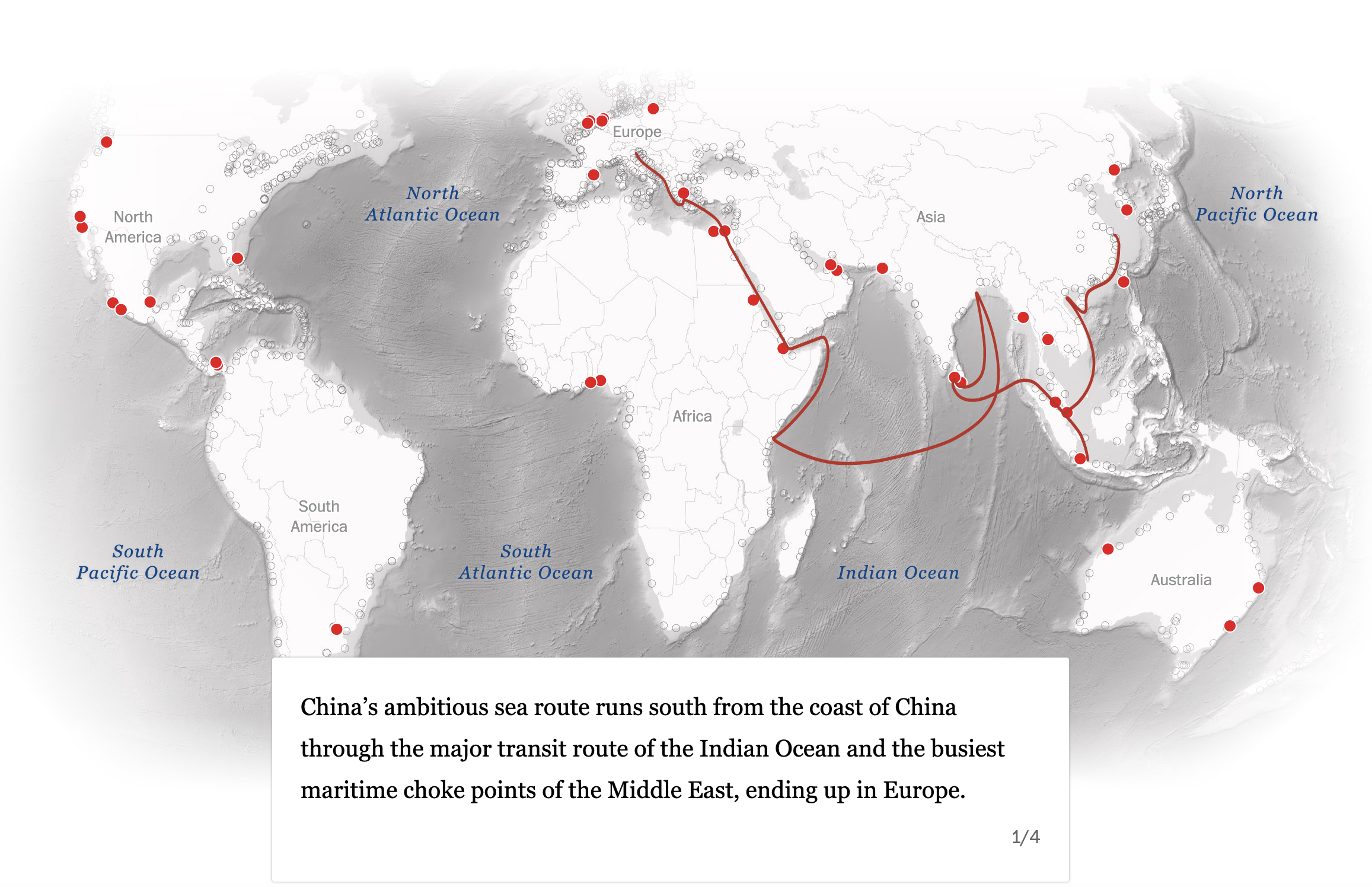
When Xi announced his plan, China had stakes in 44 ports globally, providing a foundation for his strategy.
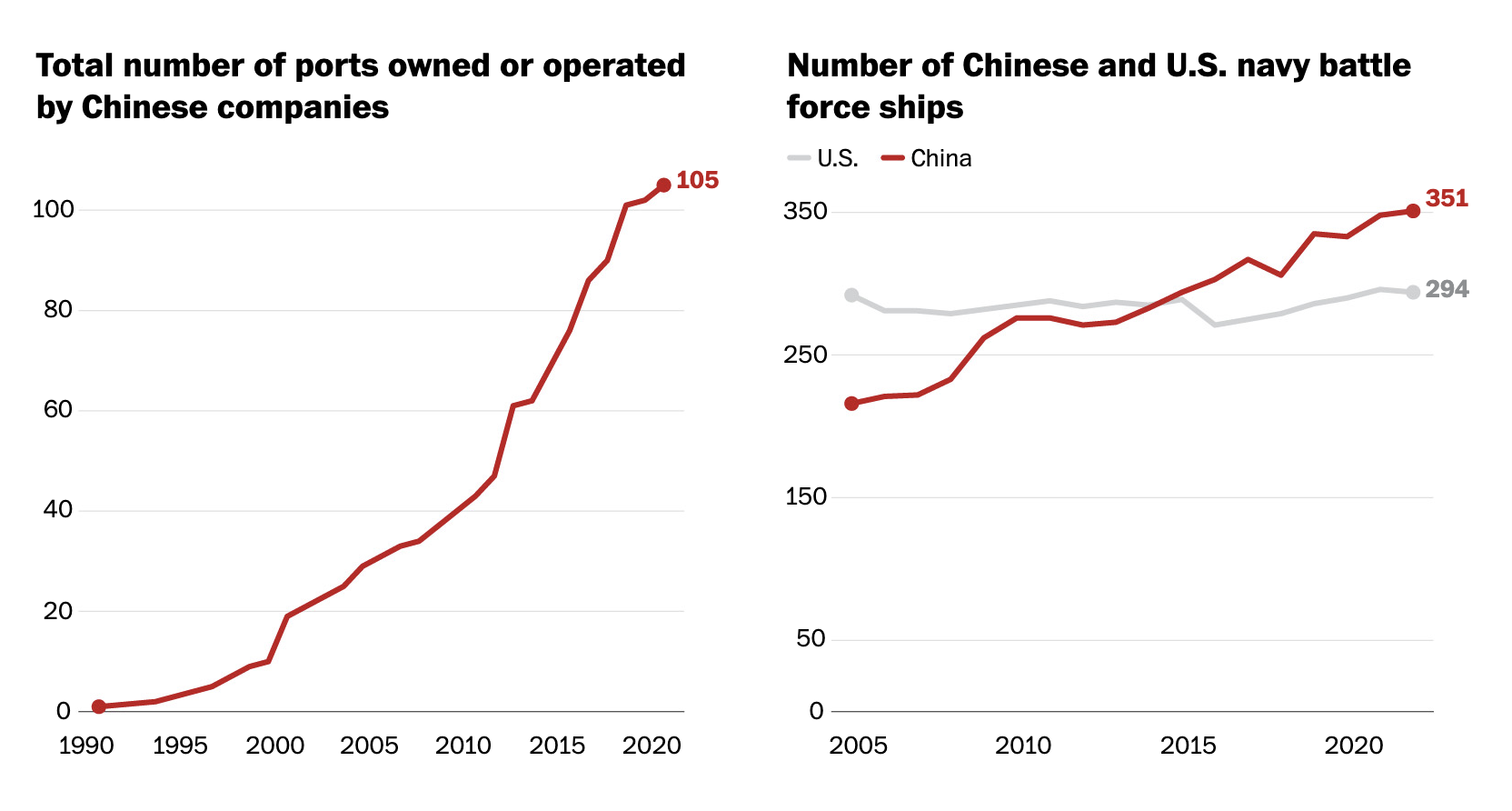
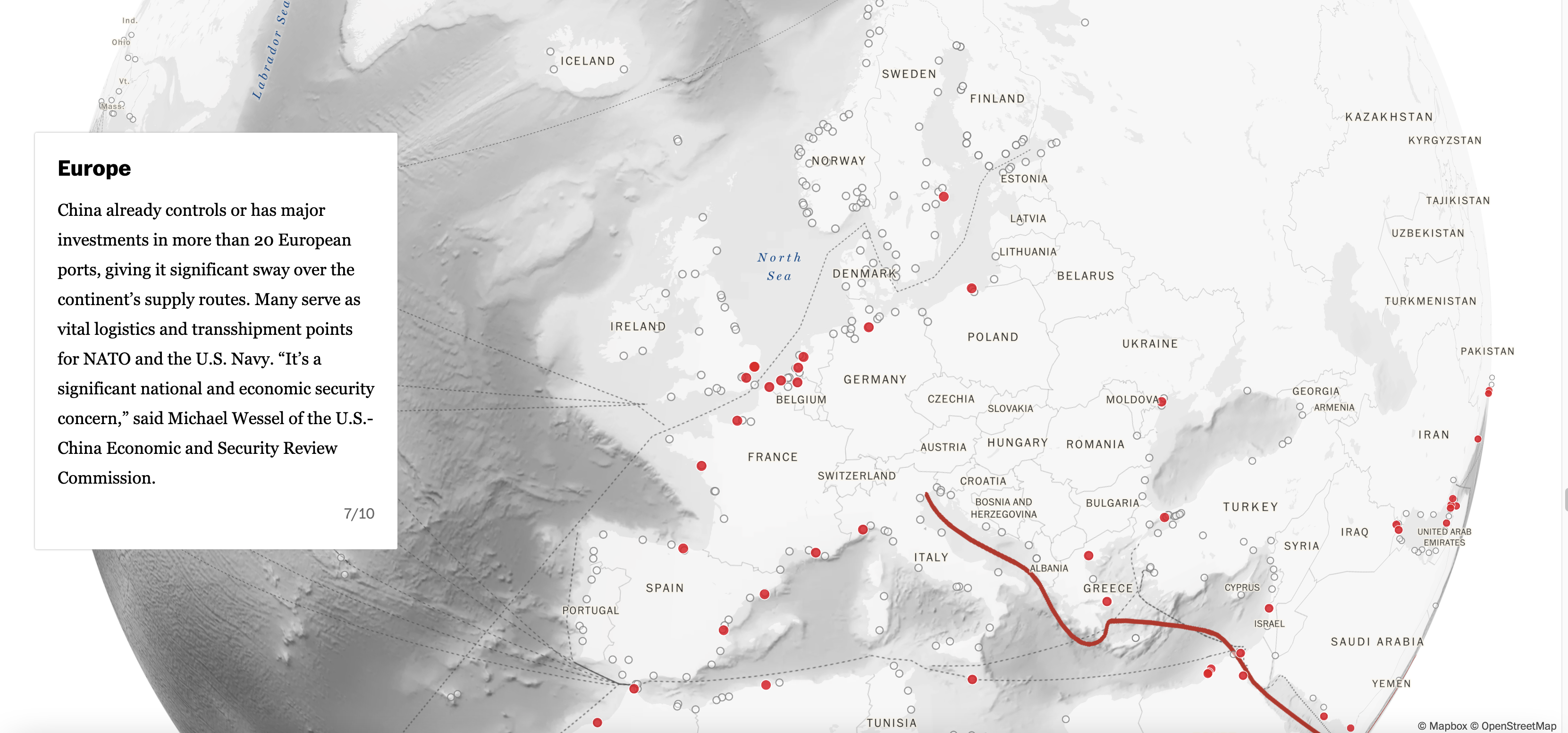
A decade later, China owns or operates ports and terminals at nearly 100 locations in over 50 countries, spanning every ocean and every continent. Many are located along some of the world’s most strategic waterways.
The majority of the investments have been made by companies owned by the Chinese government, effectively making Beijing and the Chinese Communist Party the biggest operator of the ports that lie at the heart of global supply chains.
The expansion is critical to China’s economic power and has significant military implications as well, analysts say. “This is not coincidental,” said Carol Evans, director of the Strategic Studies Institute of the U.S. Army War College. “I firmly believe there is a strategic aspect to the particular ports they’re targeting for investment.”
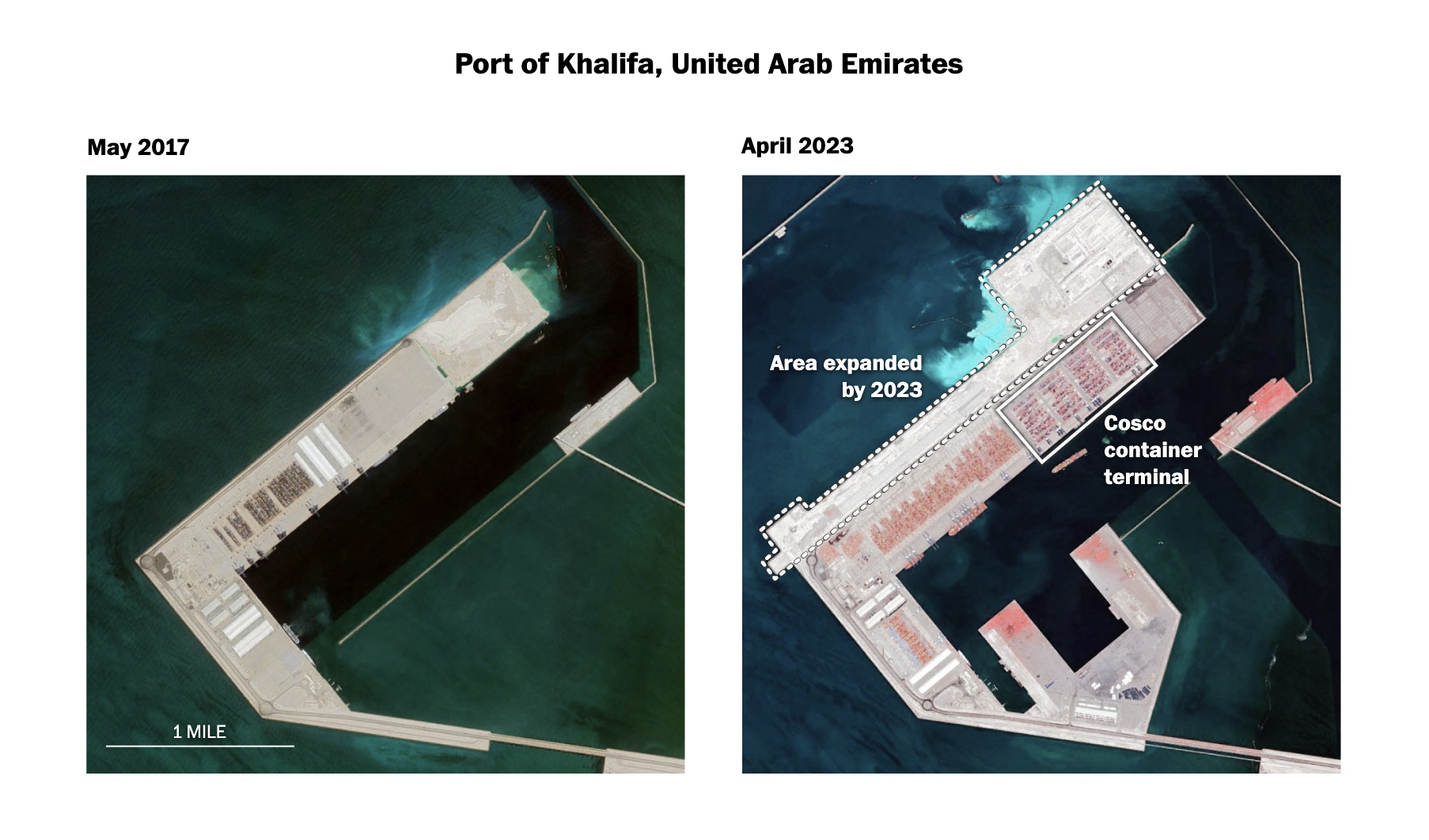
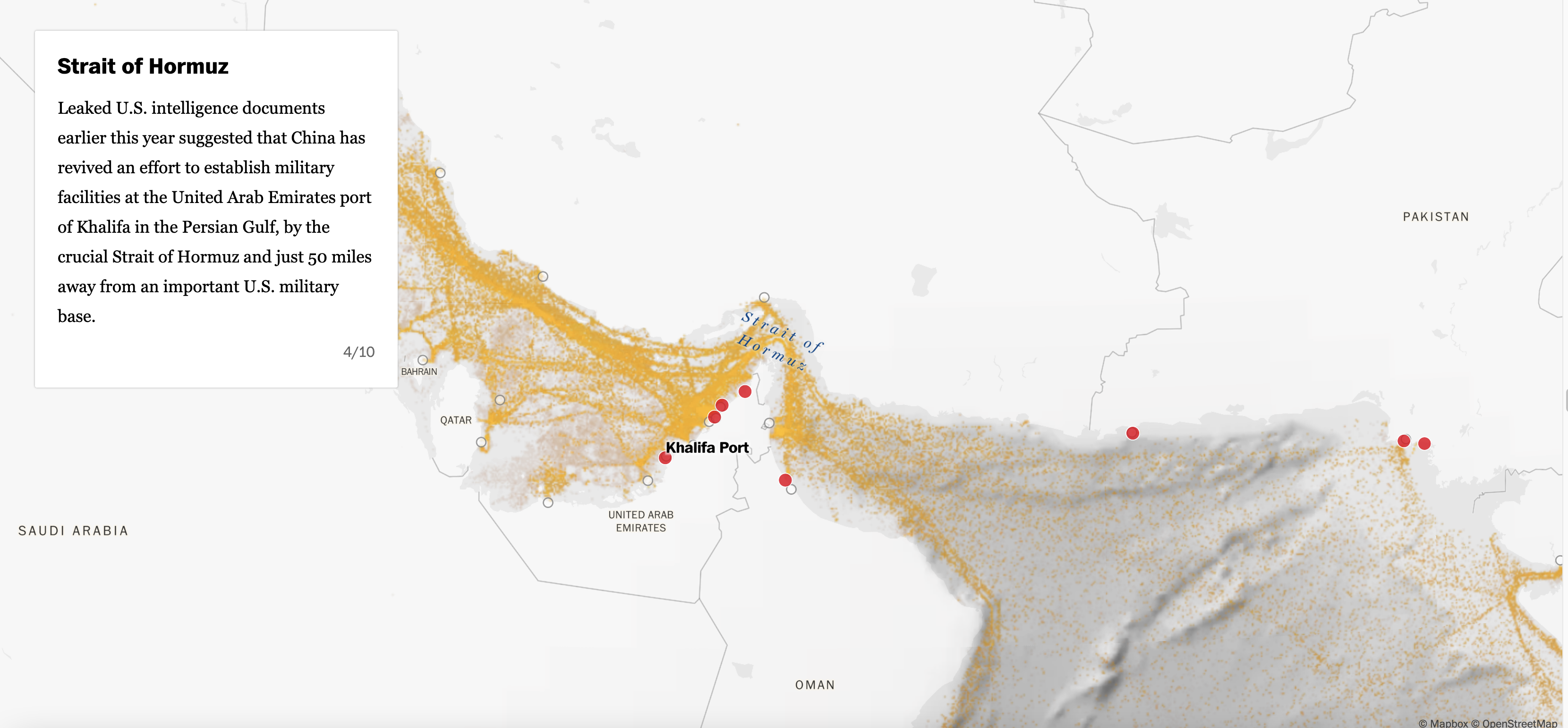
The stated aim of this maritime network is commercial: to enhance and streamline China’s access to worldwide markets. In 2018, China expanded its maritime footprint at the Khalifa port in the United Arab Emirates, an important connector between Asia, Africa, Europe and the Middle East. Chinese state-owned Cosco Shipping built a commercial container terminal at the port, which it now operates.
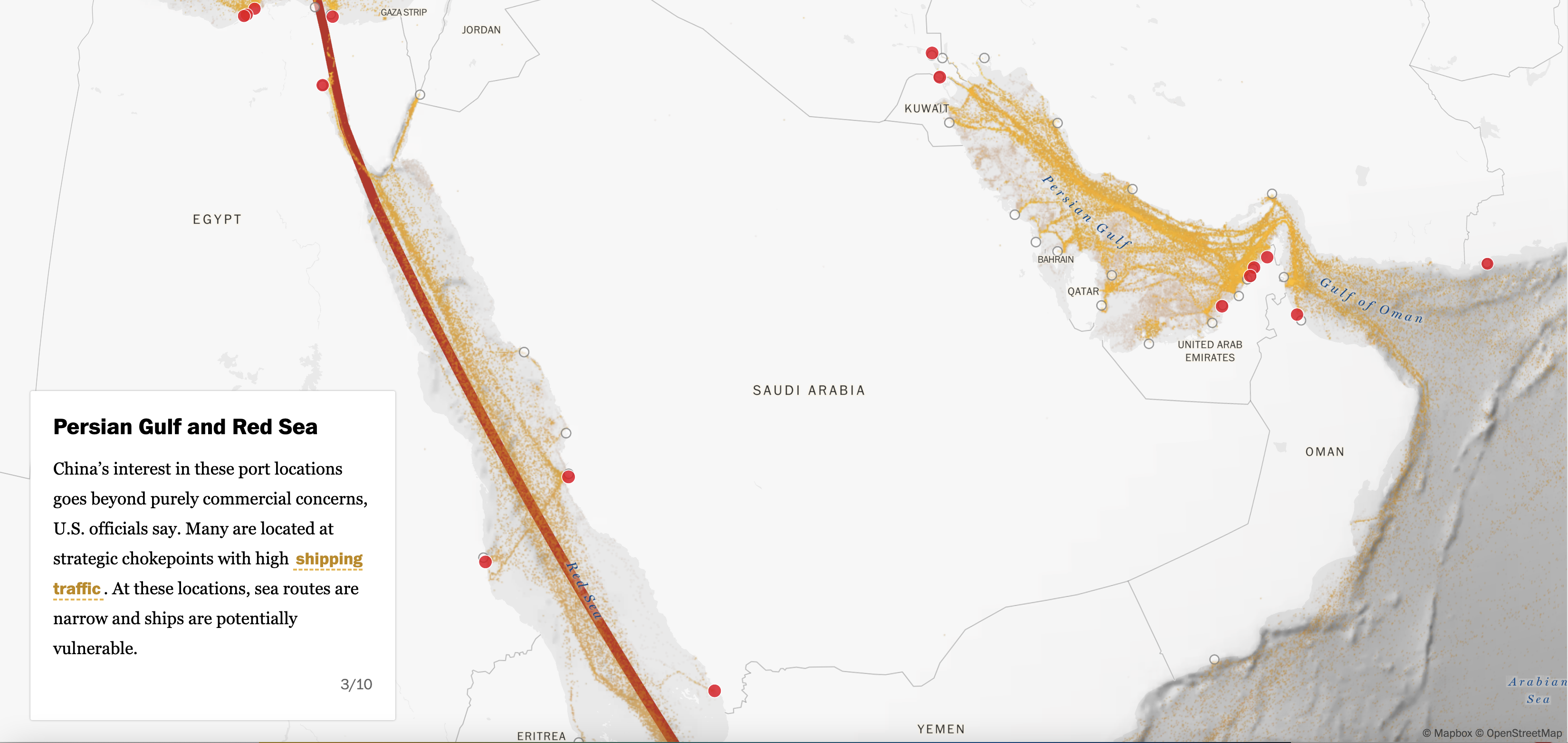
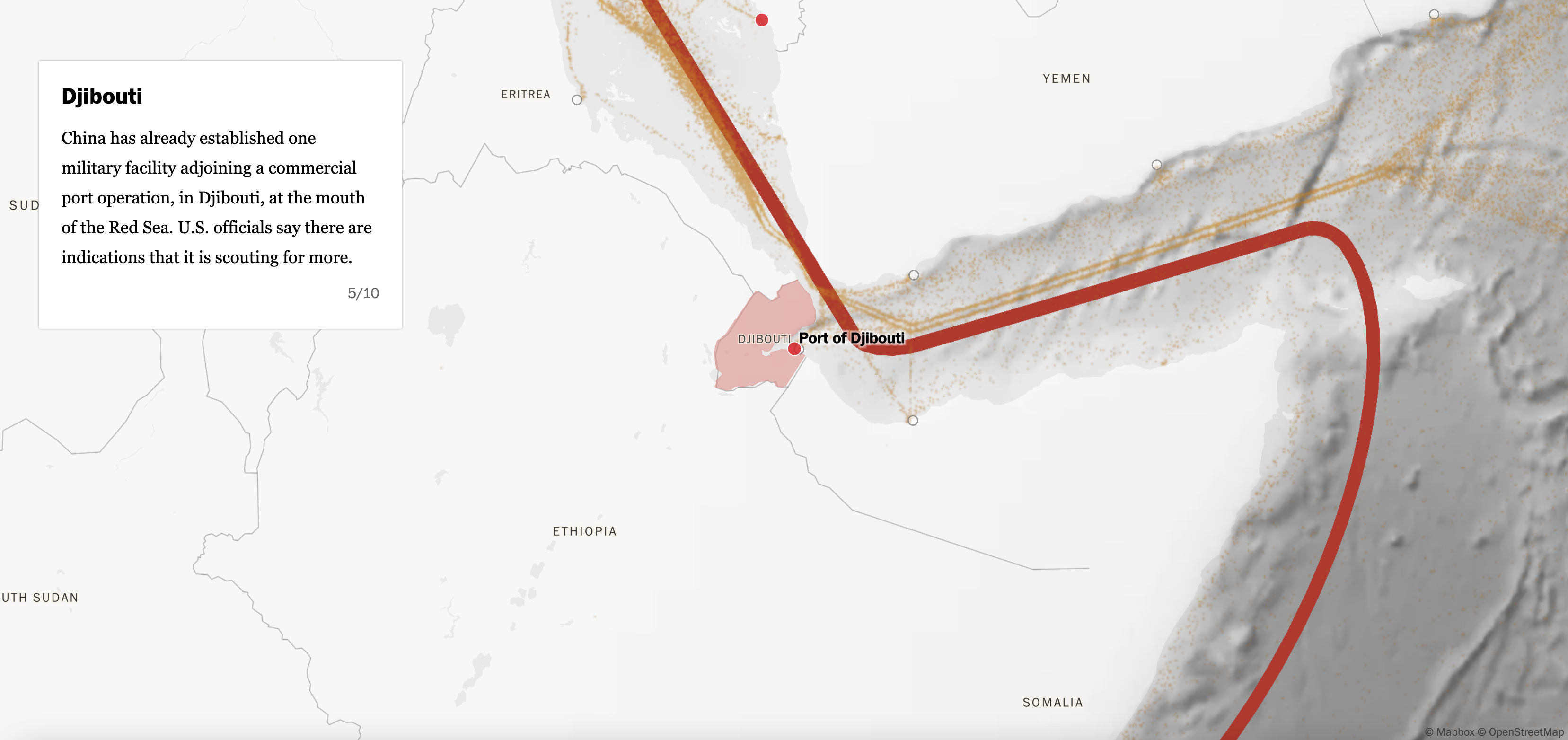
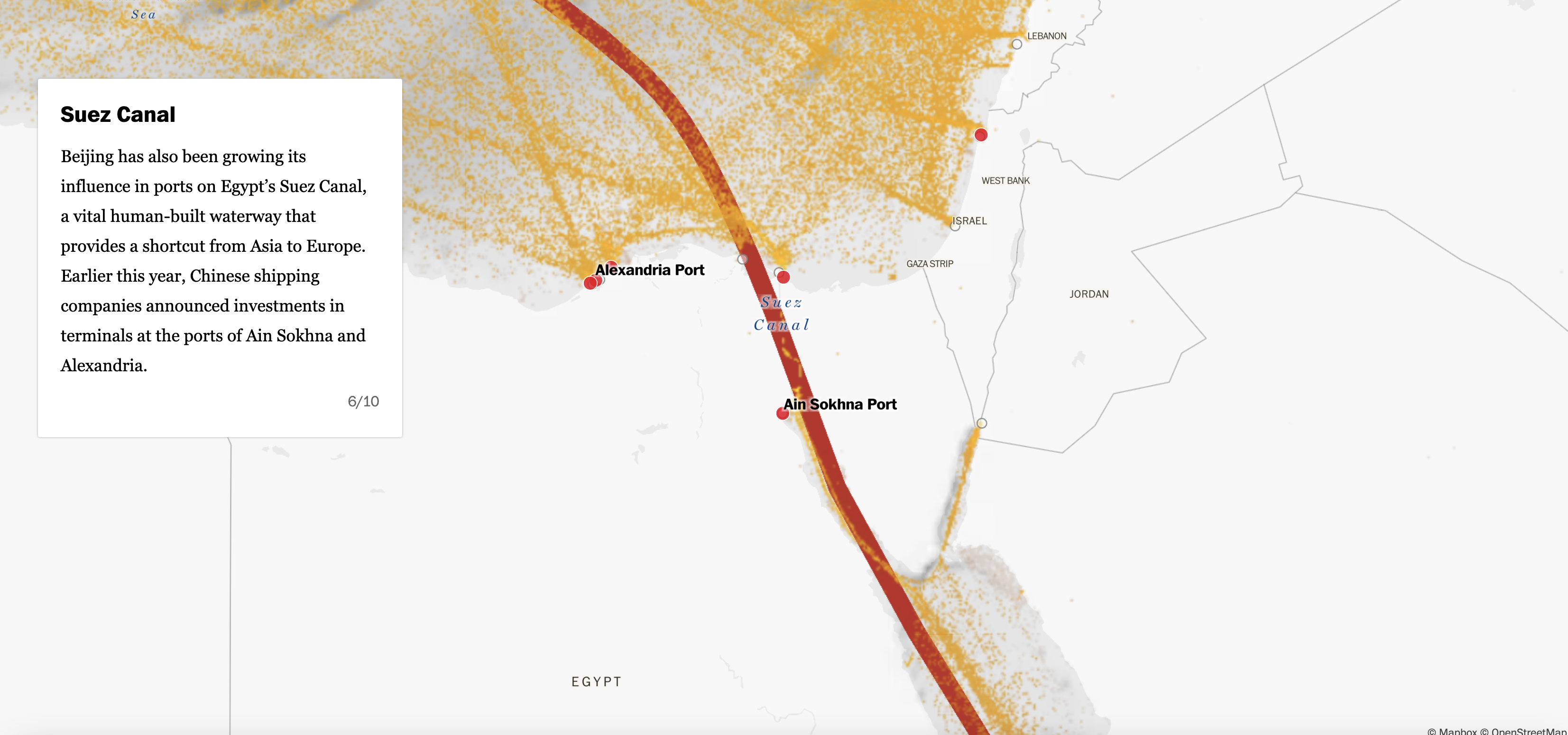
The Chinese Communist Party’s efforts to forge new economic and diplomatic alliances, including through its Belt and Road infrastructure initiative, are now well known. Also, at every point of the compass, Beijing is laying the foundations of its new international order and shaping places and institutions outside its borders in its image.But the investments go beyond that. They give Beijing a window into the business dealings of competitors and could be used to help China defend its supply routes, spy on U.S. military movements and potentially engage U.S. shipping, according to analysts. Chinese-owned ports or terminals are already ports of callfor Chinese warships, such as the flotilla that entered the Nigerian port of Lagos in July.In late 2015, China acknowledged it was building a military base adjacent to the Chinese-operated port of Djibouti. The African base was officially opened in 2017, only six miles away from a U.S. military base in the country. Located at the narrow entrance to the Red Sea, Djibouti is on one of the busiest shipping lanes in the world, where about 10 percent of global oil exports and 20 percent of commercial goods pass through the narrow strait to and from the Suez Canal.
Beijing is decades away from matching the U.S. military presence worldwide, but China has the biggest and fastest-growing navy in the world, and increasingly it is venturing beyond the shores of eastern Asia.
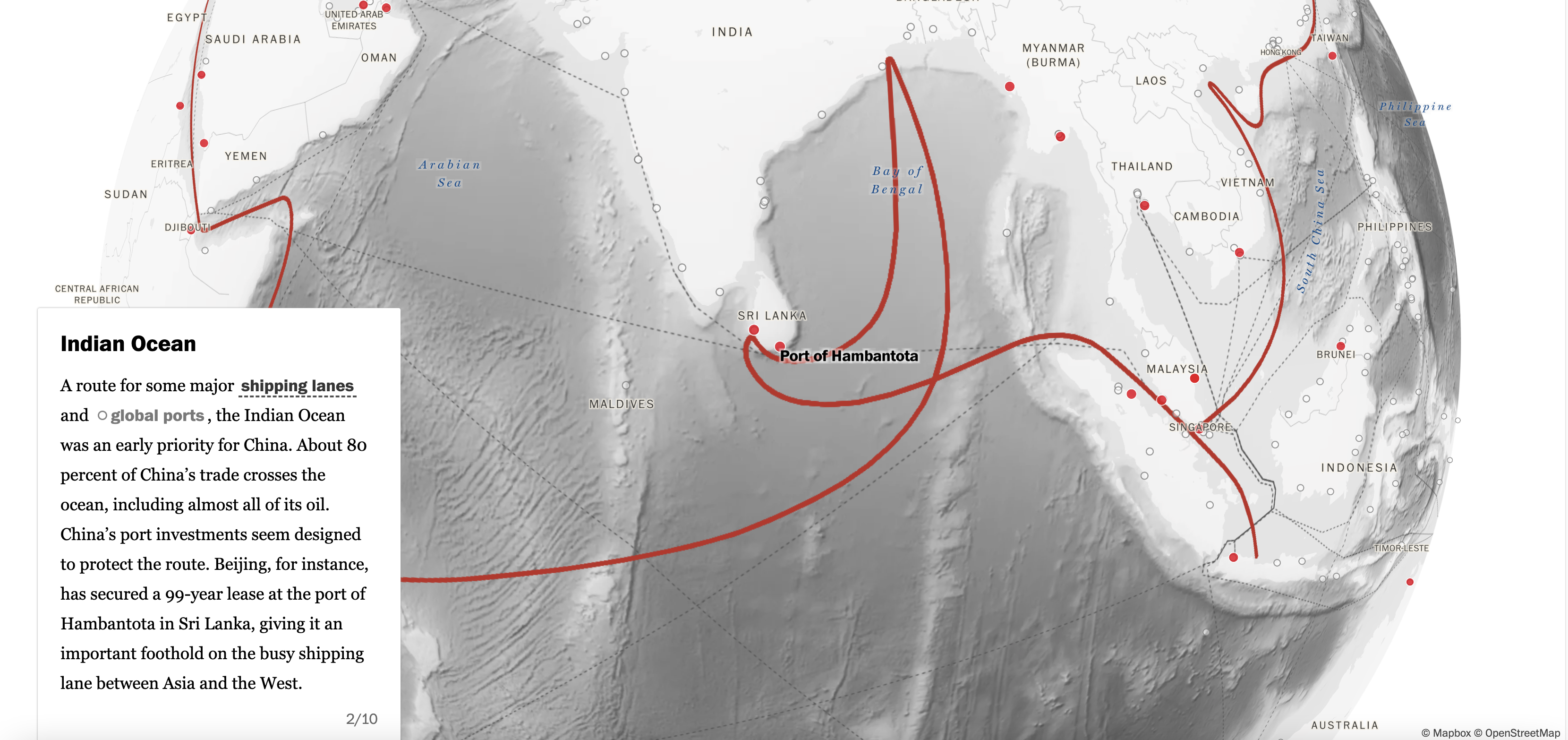
From having no naval presence in the Indian Ocean two decades ago, for instance, China now maintains six to eight warships in the region at any given time, U.S. officials say.
Indian Ocean
Persian Gulf and Red Sea
Strait of Hormuz
Djibouti
Suez Canal
Europe
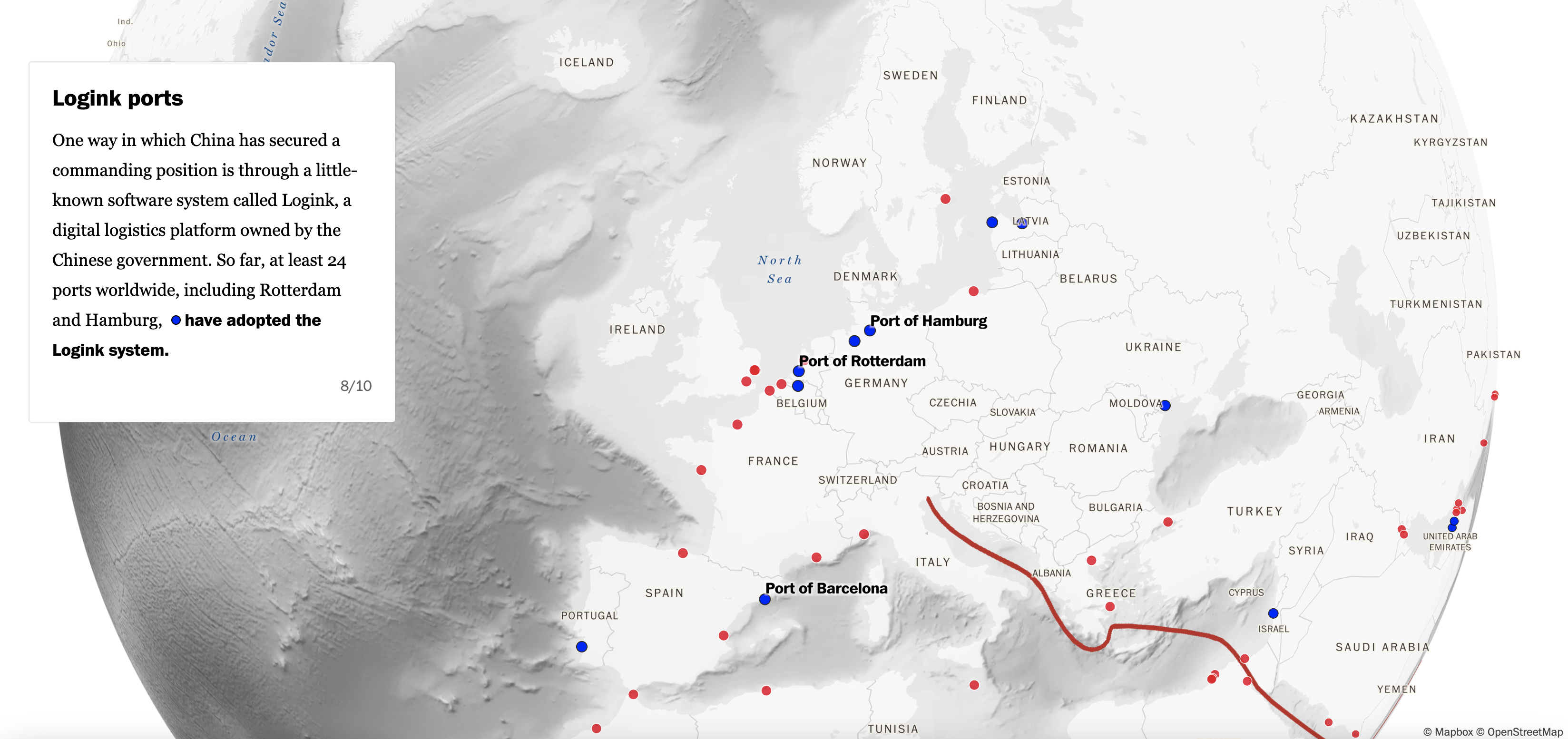
Logink ports
Logink potentially gives China access to vast quantities of normally proprietary information on the movements, management and pricing of goods moving around the world. The U.S. Transportation Department issued an advisory in August warning U.S. companies and agencies to avoid interacting with the system because of the risk of espionage and cyberattack.
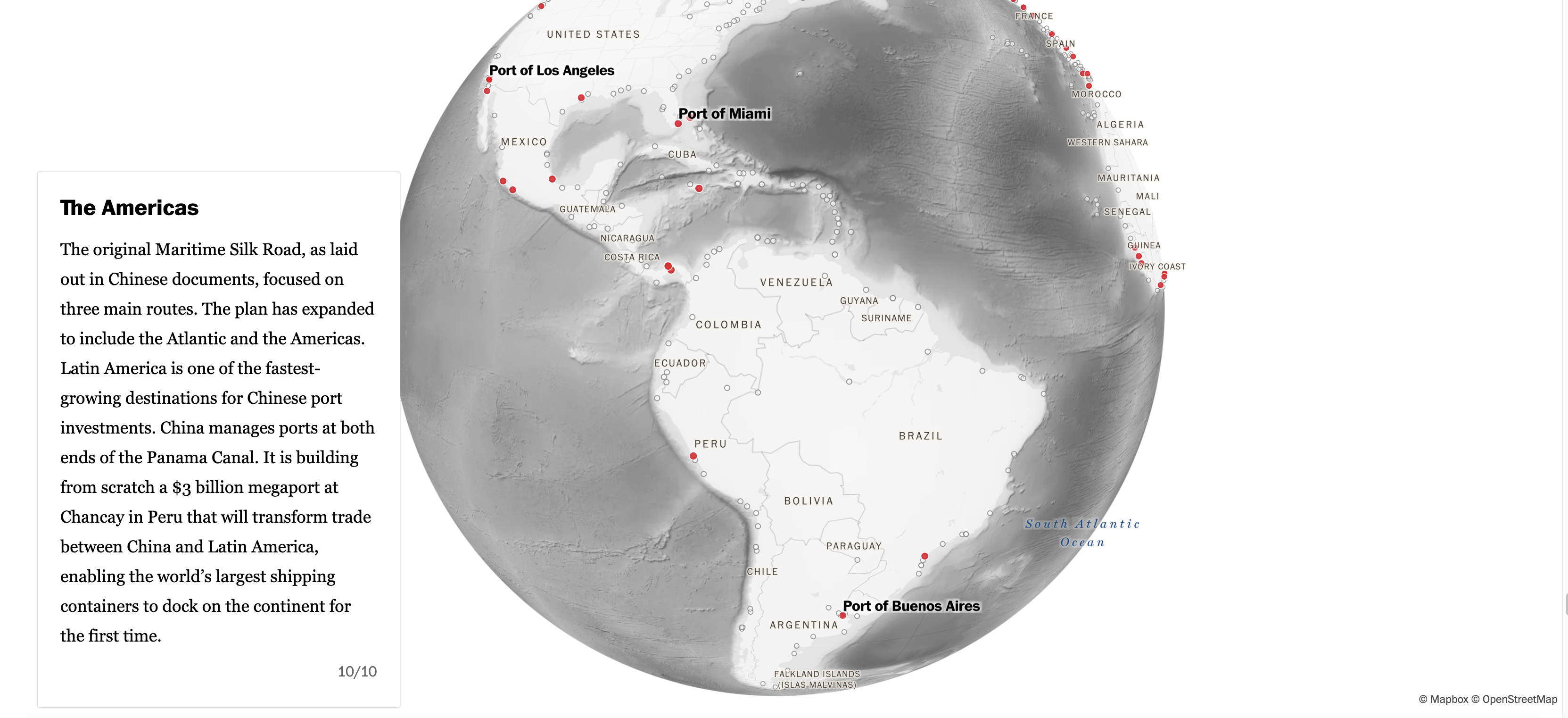
The Americas
But China’s port network presents a different kind of challenge to U.S. security interests, separate from the threat of war, said Isaac Kardon of the Carnegie Endowment for International Peace. China is now the world’s premier commercial maritime power, and its strategic hold over the world’s supply routes could be used to interdict or restrict U.S. trade, troop movements and freedom of navigation in a range of different ways. “It’s an asymmetrical threat,” he said.
Focusing primarily on The New Seven Sisters - the largely state owned petroleum companies from the emerging world that have become key players in the oil & gas industry as identified by Carola Hoyos, Chief Energy Correspondent for The Financial Times - but spanning other nascent opportunities around the globe that may hold potential in the years ahead, Wildcats & Black Sheep is a place for the adventurous to contemplate & evaluate the emerging markets of tomorrow.